
Colour:
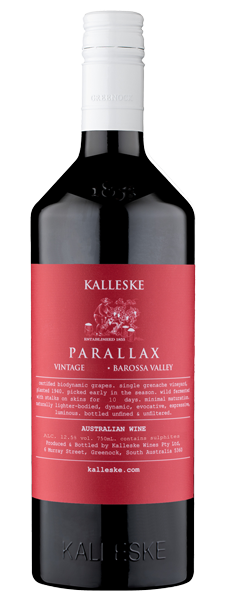
Parallax 2026 is luminous cherry to ruby-red in colour.
Aroma:
The aroma is superbly lifted and irresistibly alluring, bursting with a vivid, garden-fresh bouquet. Intensely perfumed floral notes and sweet musk mingle with ripe strawberry, crushed raspberry, and red liquorice, complemented by delicate nuances of white pepper, fresh thyme, rosemary, and subtle, sweet earth.
Palate:
On the palate, it is light-bodied, vivacious, and oozing with juicy red berry energy. Crunchy fresh fruits explode upfront, seamlessly interwoven with a slatey minerality, fine savoury herbs, and a subtle stalky edge that adds extra dimension. Fine, chalky tannins and a plush line of sherbet-like acidity provide a seamless backbone, carrying the wine through to an extraordinarily long, pure, and persistent finish.
Vintage 2026 was shaped by contrast, delivering wines of depth, balance and character. A slightly above-average Winter and Spring replenished soil moisture and set up healthy vine growth, before one of the driest, warmest Summers on record drove concentration in the fruit. Perfectly timed rainfall at the end of February refreshed the vines ahead of ripening, while mild, steady conditions through March and April allowed for even development and extended hang time. Yields were down, but quality is excellent, with perfumed whites and rosé, and deeply coloured, structured reds showing richness, purity and hallmark Kalleske balance
Parallax is a single-vineyard wine from a low yielding Grenache vineyard. The soil is a sandy loam with quartz, ironstone and subsoil clay, providing optimal conditions for these vines.
The Grenache was harvested on March 18th whilst bright, fresh and juicy with perfect natural acid. The grapes were crushed, and all stalks were included in the fermenter to add tannin, structure and complexity. The native wild yeast from the vineyard were left to naturally ferment with temperature peaking at 23 degrees C. Pumpovers were performed twice daily, circulating the fermenting juice through the skins and stalks. After 7 days on skins, the must was pressed to tank for natural malolactic fermentation and brief maturation prior to bottling